

Report Flags Gaps in Gender, Disability Funding, Seeks Inclusive Budgeting


By Ndifreke Enefiok, Uyo
A report examining Akwa Ibom State’s capital budgets between 2024 and 2026 has identified gaps in funding for women, girls and persons with disabilities, raising concerns about the extent to which their needs are reflected in the state’s budget priorities.
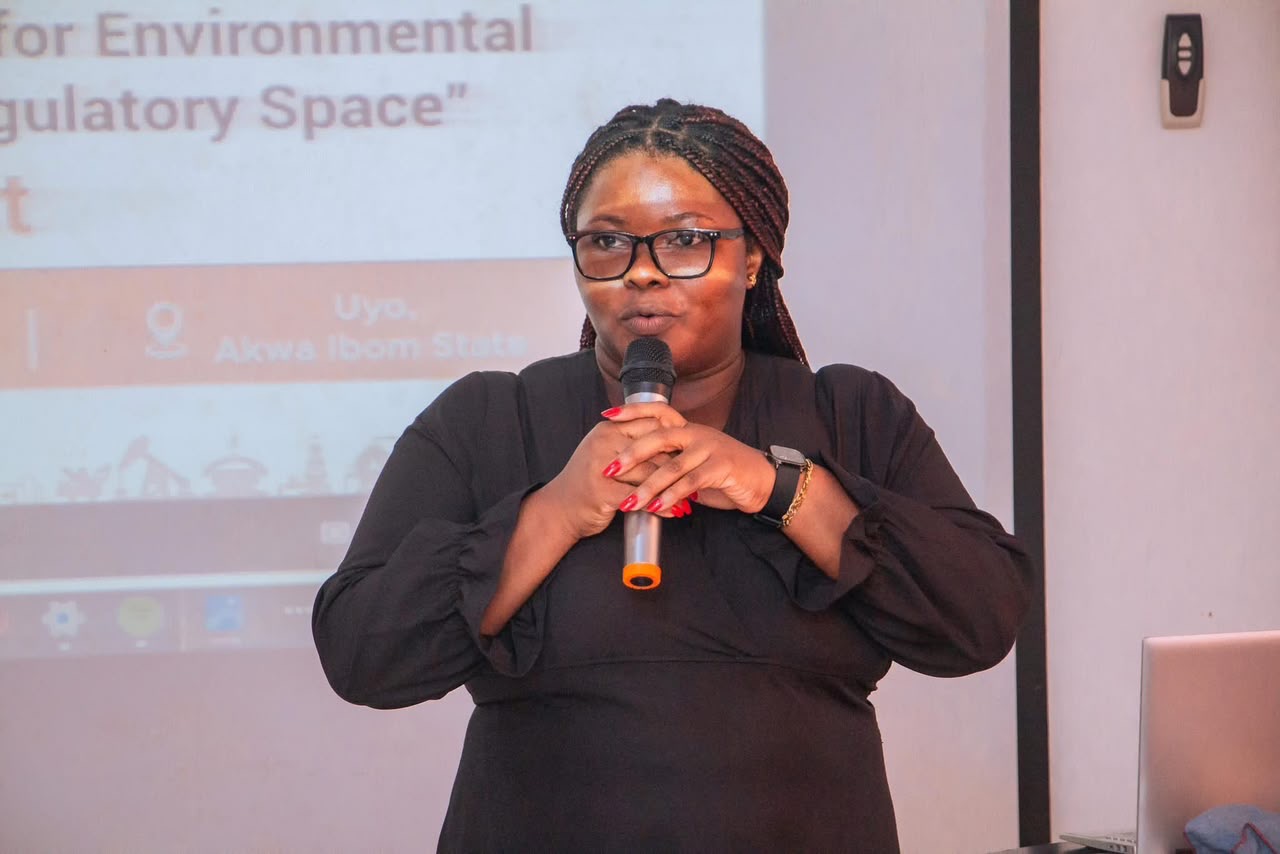
The report, titled Who Is Funded, Who Is Left Out? Gender, Disability and Social Inclusion in Akwa Ibom State’s Capital Budgets, 2024-2026, was presented at a capacity-building meeting for youth-focused civil society organisations and the media on Gender Responsive Budgeting, on November 19, t the Policy Alert Office in Uyo.
The project, Budget as Policy: Advancing Gender Justice Through Fiscal Analysis, is implemented with support from the Nigeria Youth Futures Fund (NYFF).
The report, authored by Lucy Eyo, examines allocations to Ministries of Women Affairs and Social Welfare, Humanitarian Affairs, and the Primary Healthcare Development Agency, with particular attention to projects targeting women, persons with disabilities and girls’ education.
Speaking at the event, Eyo, the project lead, said the analysis was prompted by the need to understand whether the state government adequately considered gender and social inclusion when planning and allocating resources for public projects.
She explained that government budgets provided an indication of its priorities and that examining budget documents would help determine whether women, girls and persons with disabilities were adequately considered in public spending.
Eyo said the project was designed not only to examine the figures but also to identify gaps that could inform advocacy with relevant stakeholders in the state.
She thanked participants for identifying with the project and said the meeting was organised to present the report’s findings, receive contributions from civil society organisations and the media, and incorporate their recommendations before the final report is published.
According to her, the report was still being reviewed because of the need to draw on the experience and knowledge of stakeholders working on gender, disability and social inclusion issues.
She said the contributions would help strengthen the report and guide the advocacy planned with three stakeholder groups in the state.
One of the report’s major findings is that although the allocation to Women Affairs and Social Welfare increased from N184 million in 2024 to N410 million in 2025 and N700.7 million in 2026, it remained a small share of the combined allocations to the three budget lines examined.
The report put the three-year allocation to Women Affairs and Social Welfare at approximately N1.29 billion, representing 4.3 per cent of the combined N30.5 billion allocated to the three sectors over the period.
It noted that the allocation accounted for 6.3 per cent of the combined budget lines in 2024, dropped to 2.6 per cent in 2025 and rose to 6.4 per cent in 2026.
While acknowledging the increase, the report observed that the allocation remained relatively low compared with the funds provided for social welfare through Humanitarian Affairs and primary healthcare.
It also identified significant fluctuations in the allocations to the other two sectors. Social Welfare through Humanitarian Affairs increased from N2 billion in 2024 to N7.45 billion in 2025 before dropping to N5.37 billion in 2026.
Similarly, the Primary Health Care Development Agency allocation rose from N750 million in 2024 to N8.05 billion in 2025 before declining to N4.93 billion in 2026.
The report said the fluctuations could make it difficult to plan and sustain programmes that require consistent funding, including inclusive education and community health interventions.
Beyond the size of the allocations, the report raised concerns about the release of approved funds, noting that the 2024 budget performance figures showed that the Women Affairs and Social Welfare line received no release against its N184 million allocation.
The disability component also recorded zero release, despite having an allocation of N420 million.
In contrast, Social Welfare through Humanitarian Affairs recorded N1.94 billion in releases and expenditure against its N2 billion allocation, while the Primary Health Care Development Agency received N685 million out of N750 million, representing 91.3 per cent.
The report explained that zero release did not necessarily establish that no related activity took place, as some projects might have received funding through other channels. However, it showed that the approved capital funds were not released as recorded in the fourth-quarter 2024 Budget Performance Report.
It further identified the non-publication of the state’s 2025 and 2026 budget performance reports as a major transparency gap.
According to the report, the absence of the documents makes it impossible for citizens, civil society organisations and the State House of Assembly to verify how much of the approved funds were released and spent on the identified projects in those years.

It stressed that the findings for 2025 and 2026 therefore reflect budget allocations and not confirmed project delivery.
The analysis also found that disability-related projects worth N157 million were removed from the 2024 revised budget.
The affected projects included the proposed construction of three inclusive schools for children with disabilities, one in each senatorial district, valued at N150 million; vocational facilities for children with disabilities, estimated at N2 million; and a N5 million baseline survey of persons living with disabilities in the state.
Although the revised budget retained an N400 million Education Intervention Fund for persons living with disabilities and N20 million for the construction of an office complex for persons with disabilities under the Ministry of Women Affairs, the report said the removal of the other projects affected plans for inclusive education and disability-related data collection.
It noted that the baseline survey would have provided information on the number, location and needs of persons with disabilities, which is important for planning and designing appropriate interventions.
The report also found that no disability project was identified in the 2026 capital budget, while the analysis of the 2025 revised budget did not specify any disability project.
It further observed that women and girls with disabilities were not specifically captured in any of the three years examined, leaving their needs between the general Women Affairs and disability budget categories.
During discussions, participants called for stronger advocacy to ensure that the state government translates its commitments to gender equality and social inclusion into identifiable budget provisions and funded projects.
They recommended that the government publish all outstanding budget performance reports to enable citizens to track approved allocations, releases and expenditure.
They also called for the restoration of disability-related projects removed from the budget, including inclusive schools, vocational facilities and the baseline survey of persons with disabilities.
It maintained that gender-responsive budgeting should not be limited to creating budget lines for women or persons with disabilities, but should also ensure that the needs of women, girls and persons with disabilities are considered across government programmes and that the resulting expenditure can be tracked.
Other recommendations included the release of approved funds for women, disability and girls’ education programmes, the introduction of specific tags to identify all gender and disability-related spending, and the funding of a baseline survey to establish reliable data on persons with disabilities in the state.
The report also recommended the reinstatement of a model girls’ school or an equivalent facility in an underserved senatorial district, improved retention support for girls, stronger legislative oversight and regular monitoring of budget implementation by civil society organisations.