


Spaces for Change Leads Niger Delta Leaders to Commit to Stronger Gender, Social Inclusion in HCDTs


By Ekemini Simon
Community leaders from across the Niger Delta have pledged firm commitments to deepen gender equality and broaden social inclusion within Host Community Development Trusts (HCDTs).
The commitment followed a regional training on Gender Equality, Disability and Social Inclusion (GEDSI) held on Friday, November 14, 2015 in Uyo, Akwa Ibom State.
The training organised by Spaces for Change (S4C) with support from the Ford Foundation brought together traditional rulers, community executives, civil society actors and development experts to strengthen inclusive governance within the Host Community Development Trusts in the Niger Delta.
In a welcome statement delivered on behalf of S4C’s Executive Director, Victoria Ibezim-Ohaeri by Ms Akinjiola Oluwatosin, Programme Associate: Energy and Extractive Justice Spaces for Change, participants were reminded that inclusive leadership is the foundation for justice, equity and sustainable development in oil producing communities.
Ibezim-Ohaeri said that many communities still bear the burdens of extraction such as polluted rivers, degraded lands and economic disruptions while women, youth and persons with disabilities (PWDs) remain largely excluded from development decisions.
While calling on leaders to redesign governance structures to become more representative, participatory and equitable, she added “When women sit at the table, priorities change. When persons with disabilities have access, barriers fall. When communities are consulted, accountability grows”.
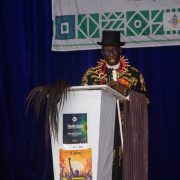
Traditional rulers from Bayelsa, Cross River and Delta States in their respective goodwill message said owing to the insight from the training, they were ready to push for inclusive governance within HCDTs in their domain. HRM David Osene from Elebele Community in Bayelsa asked communities to speak with one voice to prevent further exclusion from the benefits of hosting extractive activities.
Chief Raphael Bright, representing HRM Gregory Ja Bright of Delta State, expressed concern that many communities remain uninformed about their rights under the Petroleum Industry Act (PIA). He warned that some oil companies were already hiding under the Act to deny communities due benefits.
“Some communities have not set up their Trusts and when you ask companies for basic social responsibilities, they simply refer you to the HCDT,” he said, insisting that greater awareness and enforcement were needed.
Chief John Inyang from Cross River State commended Spaces for Change for strengthening local voices and creating opportunities for communities to understand and claim their entitlements under extractive governance frameworks.
During her presentation on “Understanding GEDSI in Resource Governance,” Ogechi Ikeh, Executive Director of the Ogechi and Sam Ikeh Foundation, explained the critical role of GEDSI in ensuring fairness, inclusion and shared progress in host communities.
She noted that oil spills, gas flaring, lack of compensation and continued degradation of the environment have placed heavier burdens on women, youth and persons with disabilities, who remain largely excluded from compensation decisions, leadership structures and benefit-sharing processes.
Ikeh said that GEDSI compliant HCDTs must ensure representation of marginalised groups on governance boards, enable inclusive and accessible participation, and implement equitable allocation of community development funds.
She warned that when these are absent, communities experience conflict, youth restiveness, unfair compensation and weakened resilience.
Mental wellness and its link to gender and inclusion were also examined. Dr. Chinaemerem Iwuanyanwu, Country Director of Secure-D-Secure International Initiative said that extractive activities often create psychosocial stress that disproportionately affects vulnerable groups. With inadequate mental health infrastructure, high treatment gaps and rising cases of gender-based violence, she argued that community leaders must embed inclusion and psychosocial support into development agendas to prevent cycles of trauma. She stressed that applying GEDSI principles provides safe spaces for women, reduces stigma for men, expands participation for youth and ensures PWDs have access to mental health services.
Governance consultant John Onyeukwu reinforced the importance of inclusive leadership, asking leaders to ensure diverse voices are heard, dismantle participation barriers and avoid tokenism. He noted that meaningful inclusion rather than symbolic representation is what strengthens decision-making, fairness and community trust.
Tijah Bolton-Akpan, Executive Director of Policy Alert, expanded on gender dimensions within HCDTs, warning that the exclusion of women, youth, PWDs, elderly persons and poorer households continues to limit the legitimacy of development plans. He urged communities to examine whether women truly influence decisions, whether benefits are equitably distributed and whether grievance mechanisms are gender sensitive.
Bolton-Akpan reminded participants that while the HCDT provides a framework for development, it is not a silver bullet; government and oil companies must still be held accountable for their statutory responsibilities.