


Etim Ekpo Communities, Stakeholders Unite to Tackle Gender Barriers Limiting Access to TB, HIV, Malaria Care

By Ekemini Simon
A fresh commitment to dismantle gender-related obstacles to TB, HIV and malaria treatment emerged on Tuesday, December 9, 2025, as communities, local government authority, health workers and civil society organisations resolved to take collective action toward improving access to life-saving care in Etim Ekpo Local Government Area.
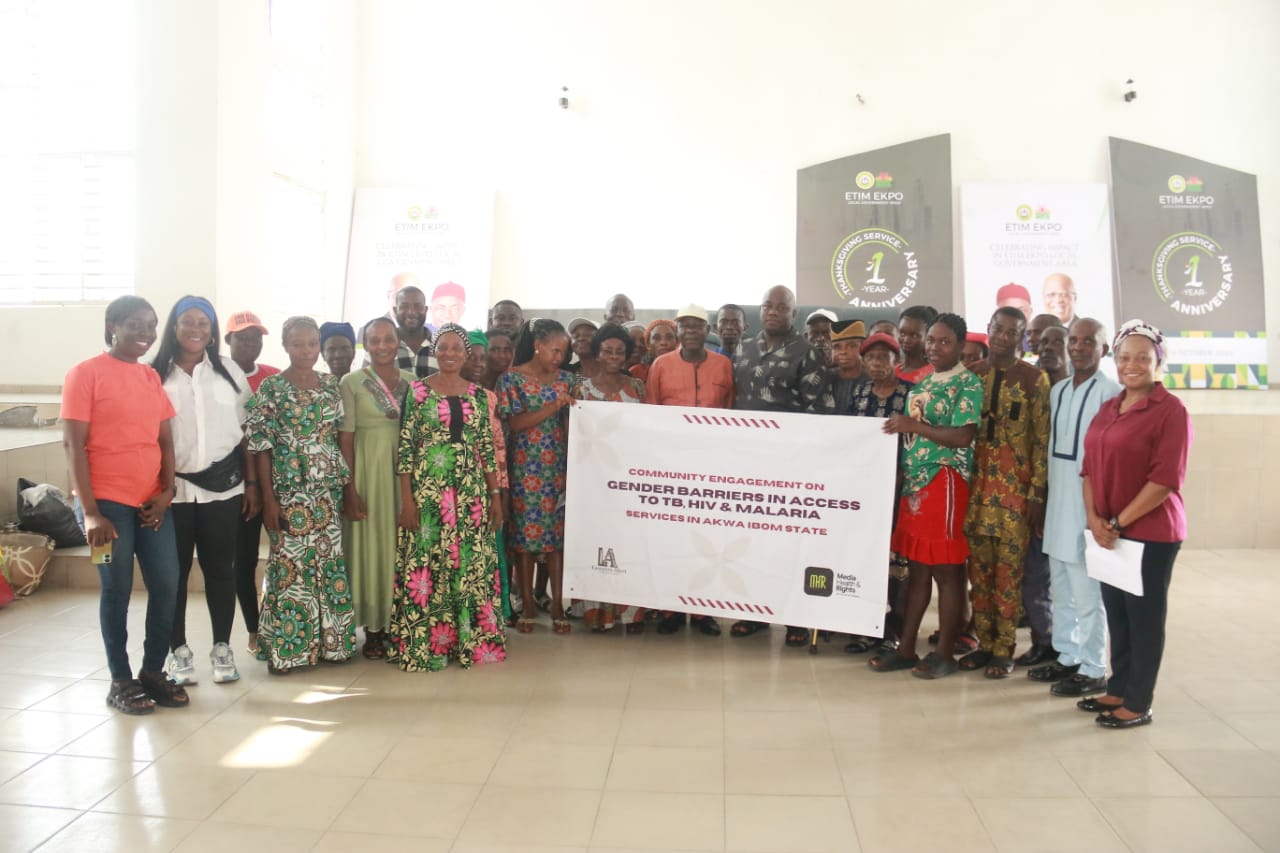
The resolve followed a Community Engagement on Gender Barriers in Access to TB, HIV and Malaria Services held at the Etim Ekpo Council Hall.
The engagement was led by Lawyers Alert in partnership with the Media Health and Rights Initiative of Nigeria (MHR), and coordinated by Women and Community Livelihood Foundation (WOCLIF), Vitonia Lead Foundation and Milestone Initiative for Human Rights and Empowerment.
The engagement which gathered women, men, youths, health workers and traditional leaders, and the authorities of the local government witnessed participants paint a troubling but actionable picture of the realities faced by residents seeking TB, HIV and malaria care.
For women, the barriers are harsh and deeply structural. They said long distances to health facilities, absence of health workers, high bills, delays in response, and the availability of “tests” that fail to match their symptoms has been a barrier.
Many expressed displeasure that drugs supposedly free never reach patients. Their solutions were the government both at the local government and the State to renovate health centres, enforce free treatment, reduce charges, send health workers for retraining, deploy house-to-house testing just like immunization campaigns, and equip facilities with proper machines and drugs.
Men pointed to crippling transportation costs, lack of security, limited staff strength and persistent unavailability of medicines. They called for standardised health centres, more qualified personnel and the provision of ambulances to aid rural access. Youth demanded availability and accountability, asking for strict monitoring of workers, confidentiality in service delivery, and a complete halt to illegal charges for free treatments.
Health workers, too, highlighted their struggles. Many patients, they said, arrive on empty stomachs; others refuse to show up, insisting on house-to-house services. They said the misconception that primary health centres exist only for child immunization creates a further disconnect. Their plea to the government included more staff, more commodities, stronger community outreaches, media-led awareness campaigns, improved welfare, and urgent rehabilitation of facilities.
Comrade Etininyene Offongekpe, Supervisor for Health in Etim Ekpo, acknowledged the depth of the problem, explaining that supporting women who remain the most vulnerable is both a health and gender priority. “When we came into the office, we saw dilapidated facilities. We are planning to rehabilitate many. We will include training, awareness and a friendlier medical environment in the budget,” he said.


Traditional leaders voiced similar frustrations. Chief Friday Okon, Village Head of Utu Etim Ekpo, described repeated disappointments experienced by villagers who arrive at health centres only to meet empty shelves and no staff. “Our people get tired of going because there is no treatment,” he said, pledging community-level sensitization despite these setbacks.
Health worker Aniema Akpan added that while most treatments are indeed free, poor roads, limited staffing, security concerns and lack of electricity hinder effective delivery. She committed to intensified community mobilization and awareness on available services.
Representing Milestone Initiative for Human Rights and Empowerment, Victoria Ikpat said the engagement is part of a wider intervention spanning multiple LGAs. “The communities have told us the barriers. What we hope to achieve is more advocacy and awareness so people know these treatments are free,” she said, adding that an evaluation of progress would follow.
Edidiong Enang, Programme Manager of Vitonia Lead Foundation, noted that the engagement brought together a full spectrum of stakeholders, from traditional councils to persons living with TB, HIV and malaria. She said this is a collaboration that is essential for long term change.
At the end of the engagement, participants resolved to commence robust but strategic advocacies to duty bearers starting from the third week of January in order to ensure the solutions provided are undertaken thus improving access to TB, HIV and Malaria services within the communities.