


A COP of Truth: What Article 6 Reveals About Power, Politics, and the Future of Climate Justice


By Dr. Mfoniso Xael
Introduction: When Climate Negotiations Become a Mirror
Every climate COP tells a story, not just about emissions and mitigation, but about power, politics, and whose voices count when the world is negotiating its survival. COP30 in Belém, described by Brazil’s leadership as the “COP of Truth,” forced the world to confront realities that many powerful actors have spent years avoiding.
The truth is simple: The climate crisis is not a technical problem; it is a justice problem.
And the battle over Article 6, carbon markets, and false solutions is a battle over narrative; who defines climate ambition, who profits from the crisis, and who bears the cost of the world’s delay.
From the perspectives of frontline communities, civil society and movements across the Global South, COP30 exposed a pattern: the more urgent the climate crisis becomes, the louder the push for shortcuts, markets, and distractions. But the resistance is growing too, and this COP showed why the Global South must stay alert, organized, and unapologetically firm.
Article 6: The Heart of a Global Tug-of-War
Article 6 of the Paris Agreement (the section that creates space for carbon trading and so-called “cooperative approaches”) has become the most contested terrain in climate politics. It is no longer just a negotiation topic; it is the fault line between countries seeking real solutions and those looking for accounting tricks to avoid emissions cuts.
At Belém, the negotiations exposed three truths:
- Carbon markets are increasingly unreliable.
Multiple countries openly questioned the lack of integrity, double counting loopholes, and the complete absence of real mitigation outcomes in existing carbon markets. Even before COP30, scandals involving inflated credits and “phantom offsets” had damaged the credibility of carbon trading. Belém only deepened the skepticism.
- The push for markets is political, not scientific.
Countries with the highest historical emissions continue to promote Article 6 as a “cost-effective tool”, a phrase now used so often in negotiations it almost sounds harmless. But beneath it lies a stark reality: Markets exist to let high emitters keep emitting.
- The Global South is expected to offer land, forests, and communities as collateral.
Africa, Latin America, the Pacific – these regions carry vast carbon sinks. And that makes them targets.
For many negotiators from the South, Article 6 felt like a renewed scramble for land, wrapped in green branding. At COP30, the divide became unavoidably clear: countries that need real emissions cuts are not the same as countries that need markets.
False Solutions: The Expanding Menu of Distractions
Article 6 was not the only battlefield. COP30 demonstrated how aggressively false solutions are being rebranded as “climate ambition.”
- Carbon capture and storage (CCS): Still expensive, unproven, and dangerous, but heavily promoted by fossil fuel actors as a lifeline.
- Nature-based solutions (NBS): A vague framework that too often translates into land grabs, displacement of Indigenous communities, and rebranding monoculture plantations as “carbon sinks.”
- Geoengineering and solar radiation management: Once fringe ideas, now lurking in side events and proposals. These are risky planetary experiments that threaten Africa and other vulnerable regions the most.
- Carbon markets (again): Market logic continues to dominate narratives even as evidence mounts that offsets do not reduce emissions. The “COP of Truth” revealed something deeper: False solutions survive because powerful actors are more committed to preserving profit than preserving the planet.
The Just Transition Debate: Whose Transition, and for Whom?
At COP30, the term “just transition” appeared everywhere, in speeches, banners, and negotiation halls. But the politics behind it were sharply contested.
- The North’s model of “Just Transition” is export oriented. It focuses on technology, supply chains, and green markets, not people, ecosystems, or justice. Under this model, Africa is seen as a supplier of “critical minerals,” not a continent of 1.4 billion lives with rights, histories, and futures.
- Real Just Transition demands confronting the fossil fuel system. Not repackaging it.
Not extending it. Not creating new dependencies. - Communities must lead, not be managed. A people-centered transition means energy democracy, not energy extraction. It means community ownership, not corporate dominance.
It means addressing ecological debt, not deepening it. The negotiations at Belém made one thing clear: If a transition does not shift power, it is not just.
Finance: The Truth No One Could Escape
COP30 revealed the widening gap between rhetoric and reality.
- Loss and Damage funding remains too slow and too small, with complex governance structures that keep money away from affected communities.
- Adaptation finance is far below what vulnerable countries need.
- Mitigation finance continues to flow toward projects that benefit corporations, not people.
Finance is the frontline of justice. Without repaying climate debt, talk of fairness is empty.
Multilateralism in Question: Who Controls the Process?
Belém affirmed the importance of multilateralism but also exposed its fragility. Wealthy nations pushed to control timelines and dilute texts but coordinated resistance from the Global South held firm. When countries speak boldly and collectively, they can resist pressure and shape outcomes.
This is where Africa and other regions found their voice.
Africa’s Position: Between Exploitation and Agency
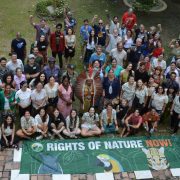

For Africa, COP30 revealed a stark truth: The world still views the continent as a carbon warehouse, a mineral store, and a testing ground for risky technologies.
But African negotiators and civil society made three key interventions:
- No to Article 6 exploitation – Africa cannot become the offset farm for high emitters.
- Yes to real finance – grants, not loans; justice, not pity.
- Yes to adaptation and community resilience – because survival is not optional.
What Africa needs is full alignment with justice movements, Indigenous leadership, and community-led climate solutions, not donor-driven agendas that repeat the logic of colonial extraction.
The Real Truth of COP30
If COP30 was the “COP of Truth,” then here is the truth:
- Markets won’t save us.
- Offsets won’t cut emissions.
- Geoengineering won’t cool the planet without catastrophic side effects.
- A Just Transition cannot be dictated by the same actors who fueled the crisis.
- Justice is not a slogan, it is the core of climate ambition.
- Without confronting power, there can be no real climate solutions.
At Belém, the world witnessed not just negotiations, but a deeper ideological battle:
the struggle between those who want to manage the crisis and those who want to solve it. One path protects profit. The other protects people and the planet. The world must choose.
The Future is in the Hands of Movements, Not Markets
The greatest lesson from COP30 is that frontline communities and civil society remain the strongest defenders of climate truth. Year after year, governments and corporations attempt to recycle the same market-based ideas, and year after year, people resist.
The future of climate action will not be shaped by carbon markets or corporate pledges.
It will be defined by communities, Indigenous wisdom, civil society movements, and the millions who refuse to allow their lands, forests, and futures to become bargaining chips.
If this is indeed the “COP of Truth,” then the truth is clear: Climate justice is the only pathway to real climate ambition. And justice demands courage, resistance, and a complete rejection of false solutions.
The world has been warned. Now it must act.