


Fisherfolks Demand Environmental Justice, Adopt Sustainable Fishing Rules at Niger Delta Dialogue


By Unyime Okon
Fisherfolks in Nigeria’s oil-rich Niger Delta have adopted a set of far-reaching resolutions aimed at tackling environmental degradation, enforcing sustainable fishing practices, and strengthening grassroots accountability for oil pollution.
The resolutions were reached at a stakeholders’ dialogue convened by Peace Point Development Foundation (PPDF) and Health of Mother Earth Foundation (HOMEF) under the Building Community Rights Defenders Project in Ibeno Local Government Area of Akwa Ibom State.
The dialogue brought together participants from Eserebom community in Calabar, Cross River State and Opolom and Okoroutip communities in Ibeno in Akwa Ibom, creating a platform for cross-learning among areas grappling with decades of oil pollution and coastal ecosystem degradation.
Participants including government officials, traditional rulers, fisherfolk, civil society groups and the media called for urgent reforms to address what they described as systemic environmental neglect and unsustainable livelihood practices threatening the Niger Delta’s fragile ecosystems.
In a communiqué issued at the end of the event, participants made a strong push for community-led environmental monitoring.
Stakeholders resolved that communities must systematically observe, document, and report oil pollution incidents to relevant authorities which they said is critical to improving response times and ensuring accountability. They agreed to demand justice from oil companies and the government through policy engagement towards clean up and restoration of the environment.
“The era of silence is over,” one participant said during deliberations, stressing that credible, community-generated data would strengthen demands for justice and compensation from polluters.
The dialogue also took a stance against destructive fishing methods. Fisherfolk were urged to abandon the use of chemicals and mosquito nets, as well as the harvesting of juvenile fish which are practices identified as major drivers of declining fish stocks and aquatic toxicity.
To reinforce compliance, participants called on fishing unions, community leaders and government agencies to enforce existing regulations on sustainable fishing, noting that weak enforcement has allowed harmful practices to persist.
Environmental restoration emerged as another central theme. The stakeholders asked the Ministries of Environment in both Akwa Ibom State and Cross River State to prioritise mangrove restoration and water hyacinth removal in their annual budgets, describing mangroves as fish nursery and critical buffers against coastal erosion and climate change.
They further advocated for the introduction of alternative livelihoods through government social policies to reduce dependence on environmentally harmful practices such as mangrove harvesting for fuel and construction.
The dialogue highlighted the need for stronger policy engagement, with participants urging communities to organise, build technical knowledge of environmental laws, and engage decision-makers using credible data and respected community representatives.
Stakeholders also emphasised the importance of sustained collaboration with civil society organisations, particularly PPDF and HOMEF, as well as leveraging the technical resources of the FishNet Alliance to scale community-driven solutions.
A recurring concern throughout the sessions was the slow response of government institutions to environmental pollution, alongside inadequate planning and budgeting for ecological challenges at the subnational level.
Participants agreed that communities must become more strategic, vocal, and persistent in demanding environmental justice, especially in holding oil companies and public institutions accountable for environmental damage.
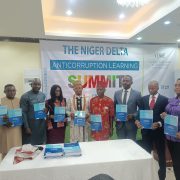
The event also featured impact storytelling through art by community members, illustrating both the environmental challenges they face and the progress made through the FishNet Alliance initiative.
Earlier in his remarks, the Akwa Ibom State Commissioner for Environment and Mineral Resources, Mr Nsikak Ekong said there has been increased social inequality within the fishing communities over the years which has contributed livelihood losses as well as conflicts among communities due to competition for resources within the affected communities by companies.

Represented by a staff in the Ministry, Ekamma Umouko, the Commissioner commended PPDF and HOMEF for creating awareness in local communities to empower with right information.
He said “with the right information, people will be able to demand and defend their right to environmental justice, responsible governance and socio-economic benefits stemming from the exploration and exploitation of their God given natural resources.”
Mr. Ekong assured of the Ministry’s readiness to work with PPDF, HOMEF and the communities to find lasting solutions to the environmental problems befalling them.
Also in his remarks, the PPDF coordinator, Umo Isuaikoh reviewed the Niger Delta Alternatives Convergence Manifesto and Nigeria Socio-Ecological Alternatives Convergence Manifesto. He said both documents have demanded resource democracy, a just energy transition and centres community rights during asset transfers or divestment, free prior and informed consent of extractive communities, mangrove restoration and afforestation amongst other targets. He called on the communities to use the two documents as a compass that will guide them towards environmental justice.