
Journalists Charged to Go Beyond ‘He Said, She Said’ Reporting


By Julius Nsikak
Journalists across media organisations in Akwa Ibom State have been charged to move beyond ‘he said, she said’ reporting and focus on detailed investigative journalism capable of exposing Illicit Financial Flows (IFFs) and financial crimes in Nigeria and Africa.
The charge was made recently during a two-day capacity-building workshop for journalists in Uyo, Akwa Ibom State, organised by the Africa Network for Environment and Economic Justice (ANEEJ) in partnership with SecFin Africa, under the principal theme, “Strengthening CSOs and Media Capacity to Contribute to the Fight Against Illicit Financial Flows in Nigeria.”
The training equipped journalists with knowledge and practical approaches to understanding, investigating and reporting IFFs, financial crimes and other practices that deprive governments of resources needed for development.
IFFs were explained during the workshop as the cross-border movement of funds that are illegally earned, transferred, owned or utilised.
In simple terms, they involve the movement of money that is illegally generated, hidden or improperly recorded, often resulting in financial losses to governments and weakening national economies.
The Executive Director of ANEEJ, Rev. David Ugolor, described IFFs as one of the major threats to Nigeria’s economic development, public services and national security.
Ugolor said enormous resources that should be channelled into education, healthcare, infrastructure, environmental protection and job creation were being lost through corruption, money laundering, procurement fraud, tax evasion, trade mis-invoicing, profit shifting and other illicit practices.
He noted that the consequences of such financial losses were ultimately borne by ordinary citizens through poor public services, inadequate infrastructure, unemployment and other socio-economic challenges.
Ugolor stressed that although Nigeria had established laws and institutions to combat financial crimes and IFFs, government agencies and legal frameworks alone could not address the problem effectively without active participation from citizens, the media and civil society.
He therefore urged journalists to use their platforms to investigate hidden financial transactions, follow the money and expose practices that deprive the country of resources.
The ANEEJ chief emphasised the strategic role of the media in uncovering financial crimes through investigative journalism, data-driven reporting and sustained public-interest stories that promote transparency and accountability. Similar calls have been made by ANEEJ at its other journalist-focused capacity-building programmes.
Also speaking at the workshop, the Head of Public Affairs of the Economic and Financial Crimes Commission (EFCC), Theresa Nwosu, called for stronger collaboration between the media, civil society organisations and relevant government institutions in the fight against IFFs.
Nwosu, who represented the EFCC at the workshop, urged participants to develop strategies for identifying and blocking illicit financial flows at their sources.
The EFCC disclosed at the Uyo workshop that more than ₦1.23 trillion had allegedly been siphoned from Nigeria through IFFs in the preceding year, highlighting the scale of financial losses facing the country.
Nwosu stressed the need for sustained advocacy and investigative efforts to prevent illicit funds from leaving Nigeria and the African continent.
The workshop provided journalists with practical knowledge of the financial, legal and institutional dimensions of IFFs and the tools available for investigating them.
One of the sessions, “Understanding Illicit Financial Flows and Financial Crimes in Nigeria,” was facilitated by Prof. Abdullahi Shehu, SecFin Africa Programme Representative.
Participants also examined “Assessment of Nigeria’s Legal and Institutional Framework for Addressing IFFs,” with Adedayo Kayode, Managing Consultant, Aideasbanc Consulting Limited, facilitating the session.
Another session, “Statutory Mandate of the NFIU as Nigeria’s Financial Intelligence Unit,” was handled by Ms. Aisha Bantam, Head, Strategic Communications, Nigeria Financial Intelligence Unit (NFIU).
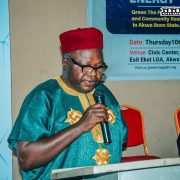

The workshop also featured a session on “Investigative Journalism and What the Media Can Do to Contribute to Addressing IFFs in Nigeria,” facilitated by Mr. Taiwo Hassan of the Institute for Security Studies (ISS).
The training further examined the role of the media in combating IFFs, media ethics, legal risks, protection of sources and digital security, as well as managing risks in investigative reporting.
The sessions challenged journalists to move beyond just reporting statements from public officials, politicians and other sources and instead interrogate the issues behind those statements through documentary evidence, data, financial records and independent verification.
Participants were encouraged to examine government expenditure, procurement processes, public contracts, company ownership and financial transactions, while developing the skills required to identify suspicious patterns and follow financial trails.
Particular emphasis was placed on the importance of understanding beneficial ownership and knowing the individuals or entities that ultimately control companies involved in financial transactions.
The training also highlighted the need for journalists to understand Nigeria’s legal and institutional framework for tackling IFFs, including the roles of financial intelligence and law-enforcement agencies.
With the right investigative approach, journalists were told, seemingly ordinary government contracts, procurement transactions and company dealings could provide leads to uncovering corruption, money laundering, tax evasion, trade mis-invoicing, procurement fraud and other forms of financial misconduct.
The workshop therefore positioned investigative journalism as a critical tool for tracing public resources, exposing financial leakages and holding institutions and individuals accountable.
It also emphasised the need for journalists to observe professional ethics, protect confidential sources, understand legal risks and take appropriate digital security measures while conducting investigations.
The training concluded with a renewed call for journalists to use the skills acquired to produce evidence-based investigations that can expose IFFs, strengthen public accountability and draw attention to the economic and social consequences of funds lost through illicit financial activities.