


Policy Alert Launches Women’s Action Group to Drive Gender-Inclusive Governance in Rivers’ Host Community Trusts

By Ekemini Simon
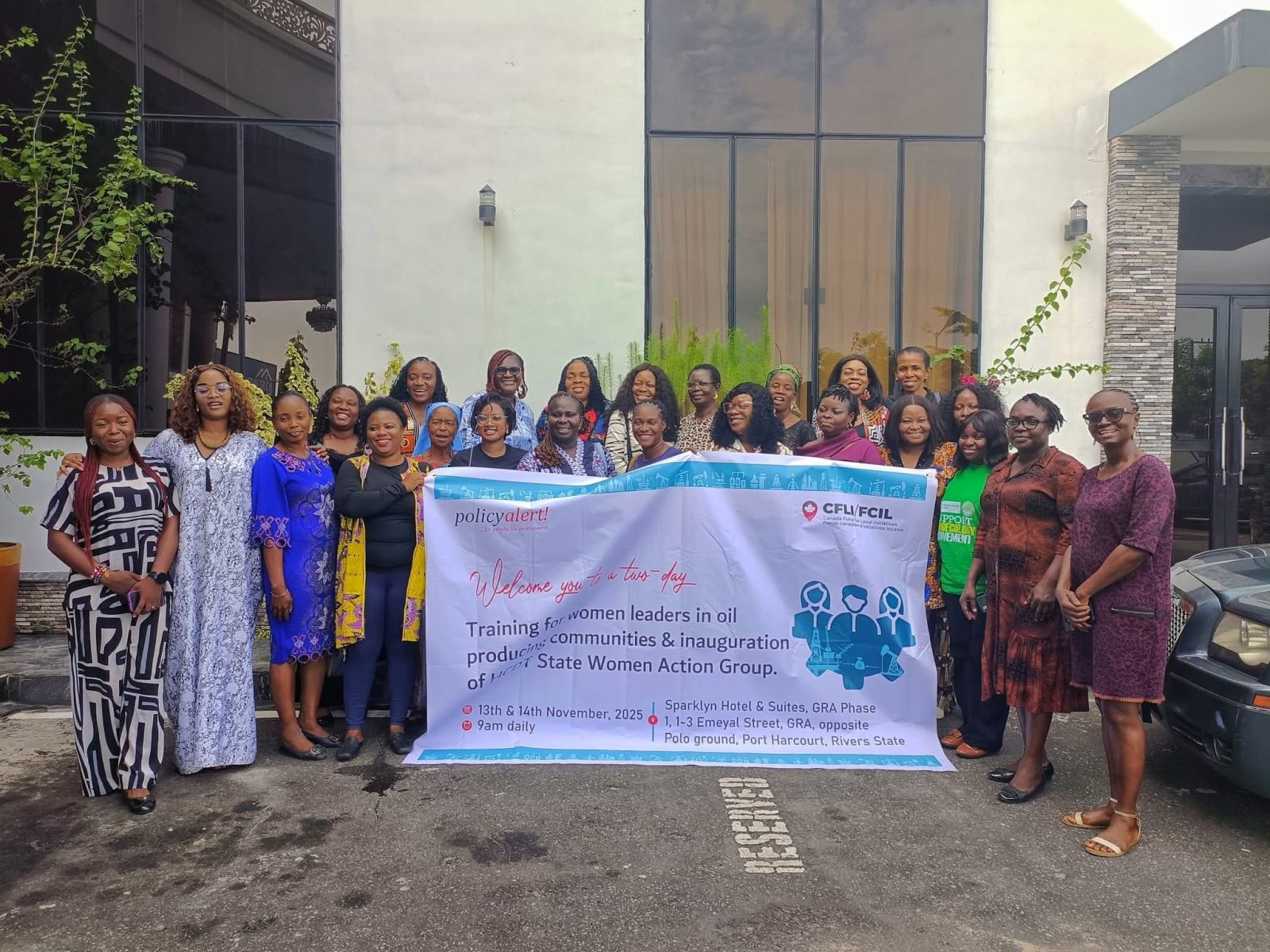
Policy Alert, with support from the Canada Fund for Local Initiatives (CFLI/FCIL), has inaugurated the Host Communities Development Trust (HCDT) State Women Action Group (SWAG) in Rivers State towards pushing for women’s inclusion in resource governance across oil-producing communities.
The group was inaugurated in Port Harcourt during a two-day training that brought together women leaders selected from various host communities. The initiative aims to strengthen women’s involvement in the operations of HCDTs established under the Petroleum Industry Act (PIA).
Executive Director of Policy Alert, Tijah Bolton-Akpan, said the training and inauguration were designed to equip women with the knowledge and tools to interrogate development processes and financial decisions within their communities from a gender-responsive perspective.
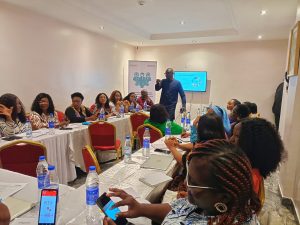
Bolton-Akpan noted that the women are expected to monitor and promote transparency in the management of funds allocated to HCDTs, which receive the statutory 3 percent operating expenditure (OPEX) from oil companies.
“Girls and boys do not have the same needs. Men and women do not have the same needs. So, we do not want this blanket approach to project development in our communities,” he said. “This intervention is meant to introduce gender-responsive transparency and accountability. When we talk about corruption, we must also ask: who benefits from what is being taken?”
He revealed that more than 120 HCDTs across the Niger Delta are already accessing funds, with over N370 billion paid into the trusts, according to the latest data from the Nigerian Upstream Petroleum Regulatory Commission (NUPRC). Despite this, he said gender and social inclusion remain largely absent in how the trusts are organised and how projects are selected or implemented.
In a presentation titled “Unveiling the Petroleum Act: Empowering Women to Shape Resource Governance in the Niger Delta,” resource governance expert Edidiong Dickson highlighted that women bear disproportionate impacts of oil pollution yet remain marginalised in decision-making processes involving multinationals and government agencies.
Dickson identified key challenges affecting HCDT implementation, including limited capacity within trust structures, political interference, weak regulatory oversight, and consistently low participation by women. He linked the low participation to entrenched patriarchal norms, poor access to information about the PIA and trust structures, and limited technical skills.
He asked participants to return to their communities as advocates for inclusive governance by mobilising women to review and engage HCDT programmes through a gender lens, strengthening their technical capacity, and building partnerships with organisations working on HCDT advocacy.

Also speaking at the event, environmental rights advocate Lucy Eyo drew attention to the scale of environmental degradation in the Niger Delta, noting that more than 13 million barrels of crude oil have been spilled in the region since 1958. She said communities continue to suffer from contaminated soil, rivers, and mangroves, worsened by persistent gas flaring that pollutes the air and wastes valuable energy resources.
Eyo explained that women who serve as farmers, fish processors, caregivers, and water collectors are disproportionately affected by environmental pollution. “Yet, women are largely excluded from environmental decision-making that affects their lives,” she said.